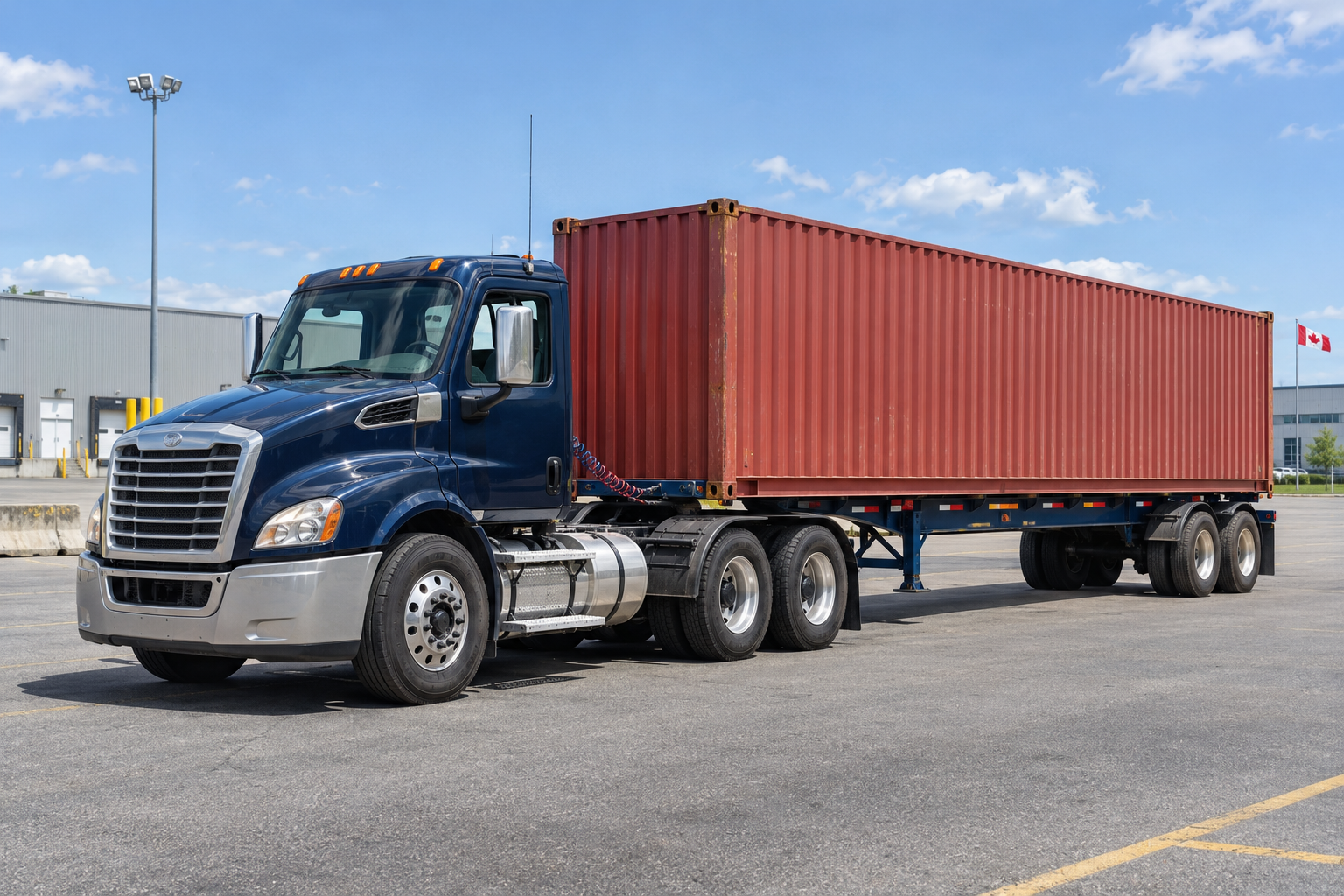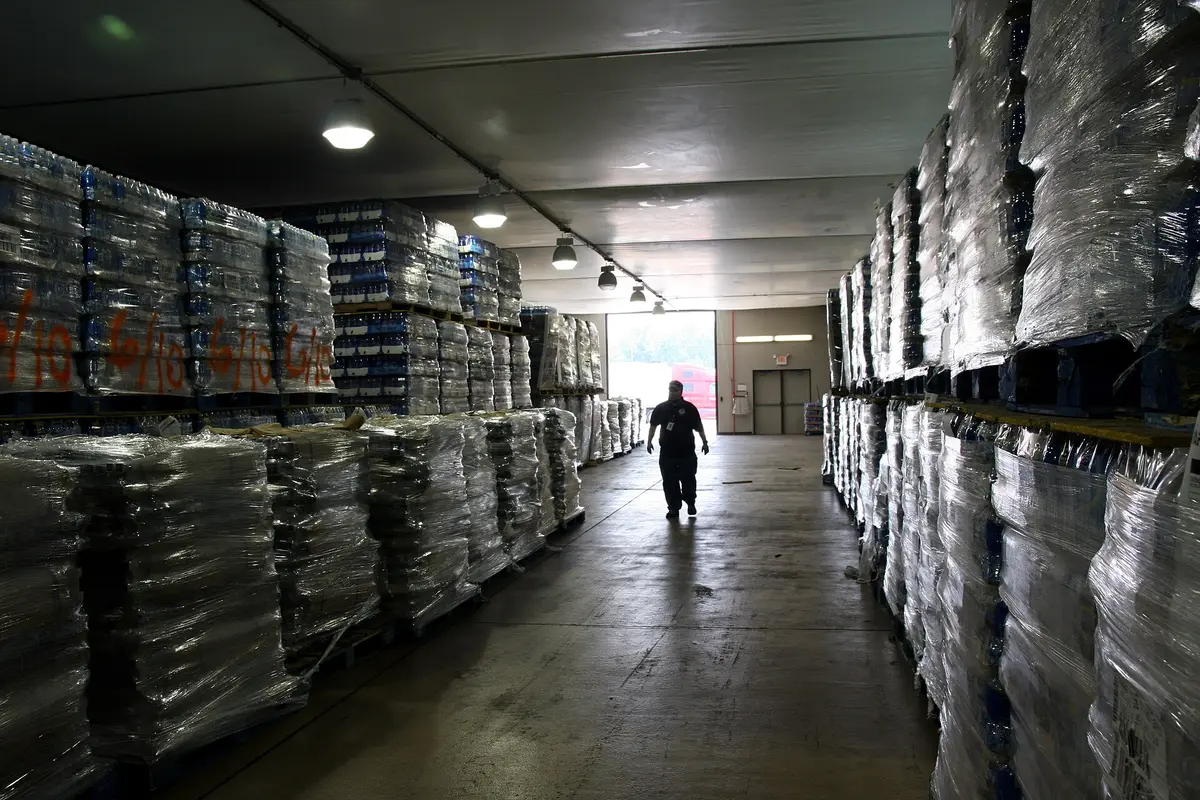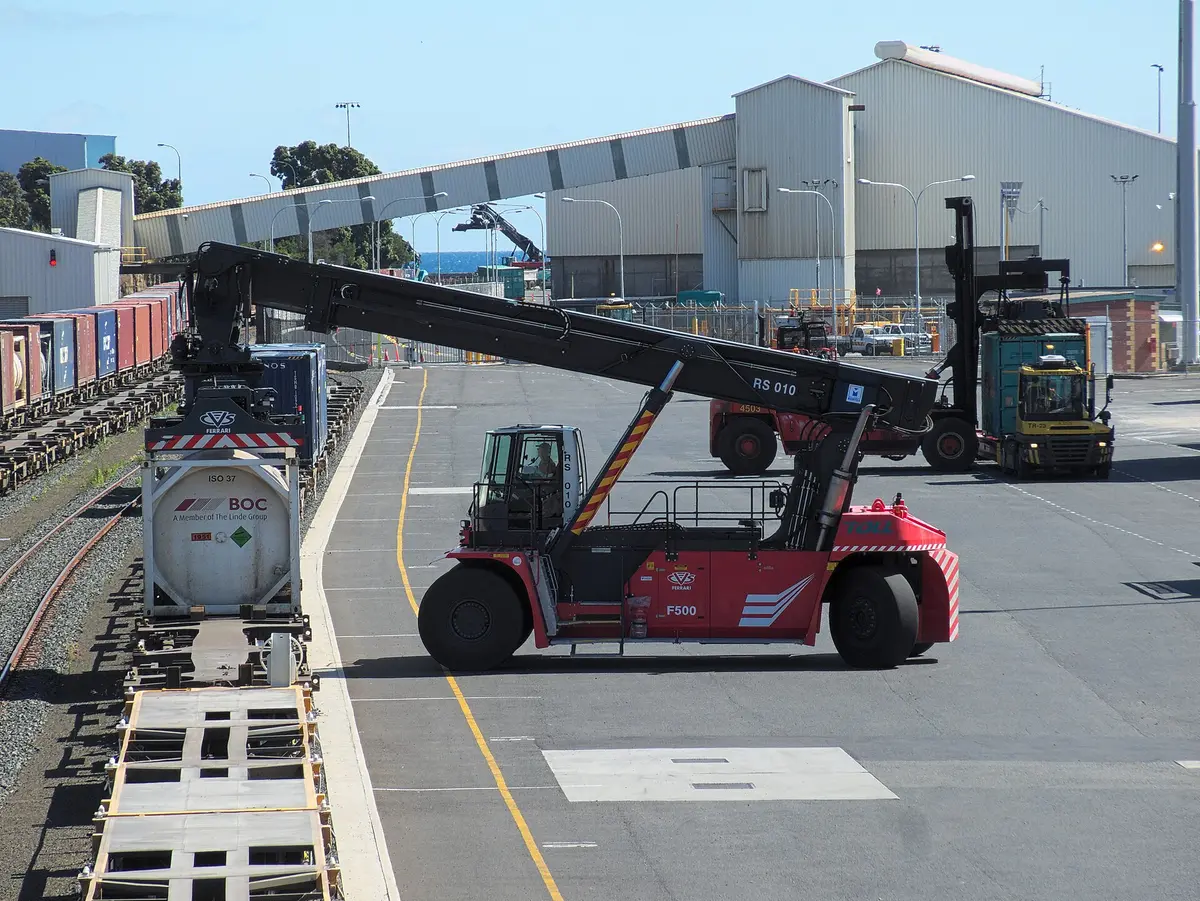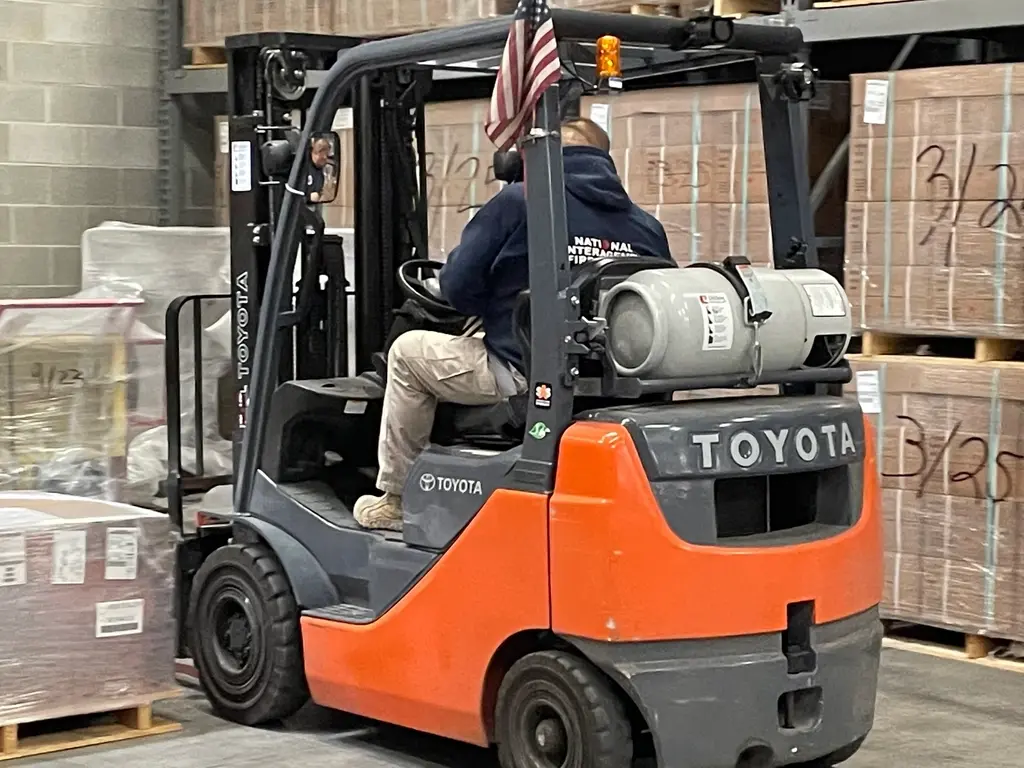
A floor-loaded container looks great on the supplier's invoice. No pallets, no wasted space, a few hundred more cartons squeezed into the same box, and a lower ocean freight cost per unit. Then it backs into your dock in Brampton or Vaughan, the doors open, and there's a wall of cardboard from floor to ceiling, all of it waiting to be moved by hand.
We unload floor-loaded containers at our Kleinburg facility every week. This guide covers what it really takes, what it costs you when it goes badly, and the options GTA importers have for handling it without tying up their own warehouse for a day.
What "floor loaded" actually means
A floor-loaded (or floor-stacked) container has cartons stacked directly on the container floor instead of on pallets. The supplier builds tight walls of boxes from the nose of the container to the doors, often right up to the ceiling. It fits more product, which is why so many overseas factories ship this way, especially for apparel, housewares, auto parts, toys and anything packed in uniform cartons.
The saving on the ocean side is real. The cost just moves to whoever has to unload it.
How long does it take to unload a floor-loaded container?
It depends on the carton count, the weight of each carton and how many people you put on it. A 40' high cube with hundreds or even a couple of thousand cartons can keep a small crew busy for several hours. Heavy or mixed-SKU cartons that need to be sorted as they come off take longer again.
Compare that with a palletized container, which a forklift operator can usually empty in well under an hour. That gap is the whole problem. If your team isn't expecting it, a floor-loaded container blows up the dock schedule for the day.
The hidden costs of a floor-loaded container
- Waiting time. If the container is delivered as a live unload, the driver waits while your crew works. A few hours of unloading can turn into a few hours of waiting-time charges on the drayage invoice.
- Chassis and per diem. If you drop the container instead, you pay chassis days, and the steamship line's per diem keeps running until the empty goes back.
- Labour. Your warehouse staff spend the day hand-stacking cartons instead of picking orders.
- Damage and miscounts. Rushed hand-unloading is where crushed cartons and short counts happen, and they're hard to claim if nobody counted or photographed the load as it came off.
Your options for handling floor-loaded containers
| Option | Best when | Main costs | Watch out for |
|---|---|---|---|
| Drop and unload yourself | You have a dock, staff and space | Chassis days and a second trip | Per diem keeps running until the empty is back |
| Live unload | A large crew is ready and the carton count is modest | Waiting time beyond the free window | Hours of waiting-time charges |
| Unload and palletize at our facility | No dock, a grade-level door, or per diem is a worry | Handling and palletizing | Book before the container arrives |
Highlighted: the option that gets the empty back fastest and delivers ready-to-forklift pallets.
1. Unload it yourself with a drop
Have the container dropped at your dock and unload it over a day or two. This works if you have the space, the staff and a dock door you can spare. Ask your drayage carrier for the chassis day rate and plan the empty return before per diem starts to bite.
2. Unload it yourself as a live unload
Only worth it if you have a big enough crew ready the minute the truck arrives and the carton count is modest. Otherwise the waiting-time charges add up fast.
3. Have it unloaded and palletized before delivery
This is the option most importers wish they'd known about earlier. The container goes to a facility like ours instead of your dock. We unload it, count it and photograph it, build the cartons onto pallets, shrink wrap them, and return the empty container to the steamship line. Your freight then arrives on pallets, often on a 53' trailer or a straight truck, and your team takes it off with a forklift in minutes.
It's a particularly good fit if you don't have a dock that can take a container, if your warehouse is in a plaza or industrial unit with a grade-level door, or if per diem is a concern because the empty goes back the same day it's unloaded.
What to ask your supplier before the container ships
- Will the container be floor loaded or palletized?
- How many cartons, how many SKUs, and what is the heaviest carton?
- Are cartons labelled clearly on more than one side?
- Is there a packing list by SKU and carton count?
With those answers in hand, you or your carrier can plan the right delivery method before the container lands at CN Brampton or CPKC Vaughan, instead of finding out at the dock door.
Tips for a smoother floor-loaded unload
- Open the doors carefully. Cartons can shift in transit and lean against the doors. Check through the gap before swinging them fully open.
- Use a telescopic conveyor or roller conveyor if you unload floor-loaded containers often. It saves hours of walking.
- Build pallets by SKU as cartons come off, not into a pile to sort later.
- Count as you go and photograph the load at the doors, halfway through and at the end. That is your evidence if a carton count is short.
- Note damaged cartons on the delivery receipt before signing.
Floor-loaded container unloading at Jaden Express
Our facility on Highway 50 in Kleinburg is close to the CN Brampton and CPKC Vaughan intermodal terminals, so we can pull the container, unload it and get the empty back quickly. Every container we unload is counted and photographed, and we can palletize and shrink wrap your cartons, hold them in our warehouse, or transload them straight onto a 53' trailer or straight truck for delivery anywhere in Toronto, Peel, York, Halton or Durham.
If you have a floor-loaded container on the water, call dispatch at 647-233-6600 or request a quote and we'll price the unload, palletizing and delivery together.
Related reading
- How to Palletize and Shrink Wrap Freight So It Arrives Intact
Stacking and wrapping rules that keep freight from shifting in transit. - How Many Pallets Fit in a 20ft, 40ft and 45ft Container?
Pallet counts for every container size, plus weight and door-height limits. - Container Pre-Pull and Yard Storage in the GTA
When pulling a container to a yard beats paying terminal storage.
Frequently asked questions
What is a floor-loaded container?
A container where the cartons are stacked directly on the floor instead of on pallets. It fits more product but has to be unloaded by hand.
How long does it take to unload a floor-loaded 40ft container?
Usually several hours, depending on the number and weight of cartons and the size of the crew. A palletized container with a forklift is much faster.
Can you palletize a floor-loaded container for me?
Yes. We unload floor-loaded containers at our Kleinburg facility, build and shrink wrap the pallets, and deliver them to your site or hold them in our warehouse.
Is it cheaper to unload a container at my own warehouse?
Sometimes. If you have a dock, staff and time, unloading yourself avoids handling charges. If it means waiting time, extra chassis days, per diem or pulling your team off other work, having it unloaded and palletized first is often cheaper overall.
Do you return the empty container?
Yes. Once the container is unloaded we return the empty to the location the steamship line specifies.