Ask three GTA carriers to quote the same 40' container and you can get three numbers that are hard to compare. One is a flat rate. One is a base rate with fuel on top. The third looks cheapest until the invoice arrives with chassis days, two hours of waiting time and a storage charge nobody mentioned.
We quote container moves out of Kleinburg every day, mostly between the CN Brampton and CPKC Vaughan ramps, CN Malport in Mississauga, the Port of Toronto and docks across the GTA. This guide explains what actually goes into a Toronto drayage price, which charges are normal, and which ones you can avoid with a bit of planning.
Is there a standard drayage rate in Toronto?
No. Anyone who gives you a per-container price without asking a few questions is guessing. A local GTA container move is priced on four things: the distance from the terminal to your dock, how long the driver is held at each end, how many days the chassis stays out, and whether the container has to sit somewhere before you can take it. Fuel is then added as a percentage.
A short pull from CPKC Vaughan to a warehouse in Concord and a run from CN Malport to a dock in Oshawa are both called local drayage. The second one ties up a truck and a driver for most of a shift, and the base rate reflects that.
What a proper drayage quote should list
An itemized quote is the only fair way to compare carriers. Ours break out the base rate, fuel, chassis, waiting time and storage on separate lines. Here is what each one means and what to ask about it.
| Charge | What it covers | Who sets it | How to keep it down |
|---|---|---|---|
| Base rate | Tractor, driver and the round trip, including the empty return | Your drayage carrier | Send complete details and book early |
| Fuel surcharge | A percentage on the base rate that moves with diesel prices | Your drayage carrier | Confirm the current percentage when you book |
| Chassis | Daily charge from terminal out-gate until the empty is returned | Carrier or chassis pool | Live unload, or unload and return quickly |
| Waiting time | Driver time at your dock beyond the free window | Your drayage carrier | Have the dock and crew ready at the appointment |
| Yard storage and pre-pull | Holding the container at the carrier's yard | Your drayage carrier | Use it only when your dock isn't ready |
| Terminal storage (demurrage) | Loaded container left at the ramp past its last free day | Railway or port terminal | Pull before the last free day |
| Per diem | Steamship line equipment kept outside the terminal too long | Steamship line | Unload fast and return the empty promptly |
Base rate
This covers the tractor, the driver and the round trip: terminal to your door, then the empty back to wherever the steamship line wants it returned. Check that the empty return is included. Some quotes price one direction only, and the return leg turns up later as a second charge.
Fuel surcharge
Most carriers add fuel as a percentage of the base rate and adjust it weekly or monthly against diesel prices. It's a normal charge. What you want to know is the current percentage and how often it changes, so a quote from three weeks ago still means something when you book.
Chassis
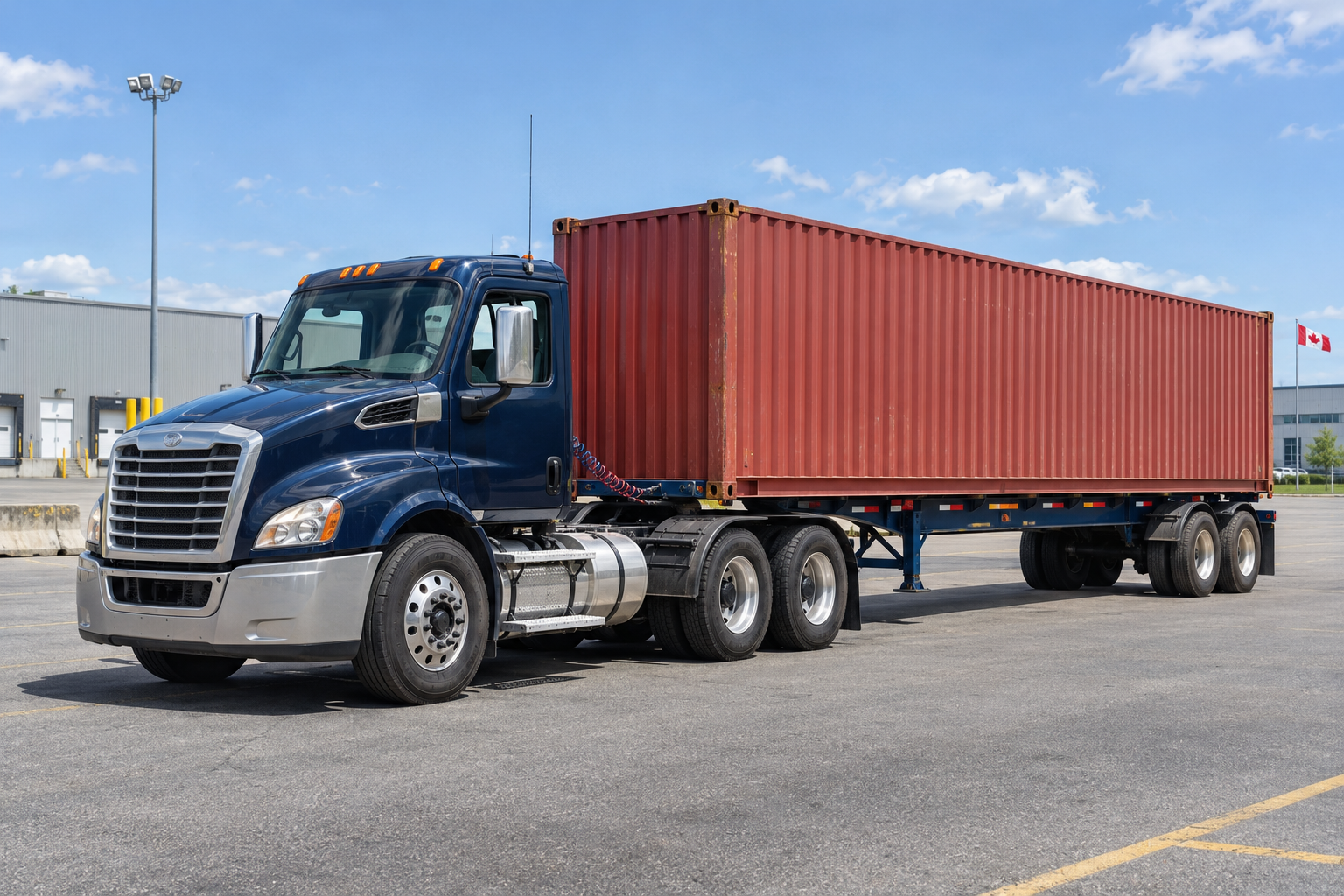
The container rides on a chassis, and somebody owns it. When the carrier supplies the chassis you'll usually see a daily charge that starts when the container leaves the terminal and stops when the empty goes back. A live unload is normally one day. A dropped container that sits at your dock for a week is seven. We run 60 of our own chassis for 20', 40' and 45' containers, which keeps this line predictable for our customers.
Waiting time
Carriers usually include a free window at your dock for a live unload, often an hour or two, then bill waiting time by the hour. Ask how the clock is measured and whether the driver records arrival and departure times. Time-stamped photos and gate receipts settle most waiting-time disputes before they start.
Storage and pre-pull
If your dock isn't ready when the container becomes available, the box has to wait somewhere. At the terminal, that costs storage once the free days run out. At a carrier's yard, it costs a daily storage fee plus a pre-pull charge for the extra move. Yard storage is usually the cheaper of the two, which is the whole reason we keep a container storage yard in Kleinburg.
Accessorial charges
Overweight containers that need a tri-axle chassis, dangerous goods under TDG rules, after-hours or weekend appointments, a second stop, or a container that has to be lifted off and grounded at your site will all add cost. None of this is unusual. It just belongs on the quote and not on a surprise invoice.
Charges that don't come from your trucker
Two of the biggest costs on a container move are set by other companies, and they catch importers off guard every month.
Terminal storage, often called demurrage, is charged when a loaded container stays at the rail ramp or port past its last free day. Per diem is charged by the steamship line when its container stays outside the terminal too long, loaded or empty. Your drayage carrier doesn't set either rate, but how quickly they pull the container and return the empty decides whether you end up paying them. We've covered both in more detail in our guide to last free day, per diem and demurrage.
The practical point is simple. A carrier with a slightly higher base rate that pulls on time and gets empties back promptly is often cheaper overall than the lowest number on your spreadsheet.
Live unload or drop: which costs less?
With a live unload, the driver waits while your team empties the container, then takes the empty straight back. You pay for one trip and possibly some waiting time, but you need people and equipment ready when the truck shows up.
With a drop, the driver leaves the container on its chassis at your dock and comes back for it later. You get time to unload properly, but you pay for chassis days and a second trip, and per diem keeps running until the empty is returned.
For a 40' of floor-loaded cartons that takes three people half a day to unload, a drop usually makes sense. For palletized freight with a forklift waiting, a live unload almost always wins. And if you have no dock and no forklift at all, look at transloading at our facility. We unload the container, and your freight goes out on a 53' trailer or a straight truck that your site can actually receive.
How to get a better drayage price without cutting corners
- Send complete details the first time: container number, size, terminal, gross weight, delivery address and whether you want a live unload or a drop. Vague requests get padded quotes.
- Book when you get the arrival notice, not on the last free day. Rushed pulls cost more and leave no room for a terminal delay.
- Have the dock ready for the appointment. Most waiting-time charges come from receivers who weren't prepared.
- Use yard storage when your warehouse is full instead of letting the container sit at the terminal.
- Deal with one dispatcher who both quotes and books. Details get lost every time a booking passes through a broker.
Why GTA importers use Jaden Express for container drayage
Our office and yard are on Highway 50 in Kleinburg, roughly 10 minutes from CN Brampton and 15 from CPKC Vaughan. We run 20 tractors and 60 chassis, hold Ontario CVOR and U.S. MC and DOT authority, and deliver daily across Toronto, Peel, York, Halton and Durham, with longer runs into Southern Ontario on request.
Every move comes with photos of the seal, the doors and the load. Gate receipts and signed PODs arrive without you having to chase them. To see how we would price your next container, request a drayage quote or call dispatch at 647-233-6600. You can also read more about our container drayage service in Toronto and our GTA intermodal terminal pickups.
Related reading
- GTA Intermodal Terminals: A Guide to CN Brampton, CN Malport and CPKC Vaughan
Where CN Brampton, CN Malport and CPKC Vaughan are and how to plan a smooth pickup. - Container Pre-Pull and Yard Storage in the GTA
When pulling a container to a yard beats paying terminal storage. - Floor-Loaded Container Unloading in Toronto: Time, Costs and Your Options
How long hand-unloading really takes and the three ways to handle it.
Frequently asked questions
What is included in a container drayage rate?
A base drayage rate normally covers the tractor, the driver and the trip from the terminal to your door with the empty returned afterwards. Fuel, chassis days, waiting time beyond the free window, storage and special handling are usually listed as separate charges.
Is fuel included in Toronto drayage quotes?
Usually not. Most GTA carriers show fuel as a percentage surcharge on top of the base rate, and the percentage moves with diesel prices.
Who pays per diem and demurrage?
These are billed by the steamship line and the terminal, normally to the importer or whoever is responsible for the container under the shipping terms. Your trucker doesn't set the rates, but a prompt pull and a quick empty return keep them low or at zero.
How early should I book drayage in the GTA?
As soon as you have the arrival notice and the container number. Booking a few days before the container is available gives the carrier time to plan the pull and leaves a buffer if the terminal is backed up.
Do you move 45-foot containers?
Yes. Our chassis fleet handles 20', 40' and 45' containers, including high cubes.