Most freight damage doesn't happen in a crash. It happens slowly, over a few hundred kilometres of potholes, forklift moves and sharp braking, on a pallet that was built a little too tall and wrapped a little too loosely. By the time it reaches the receiver, the top layer has slid, two cartons are crushed, and the delivery receipt says "damaged" next to your company's name.
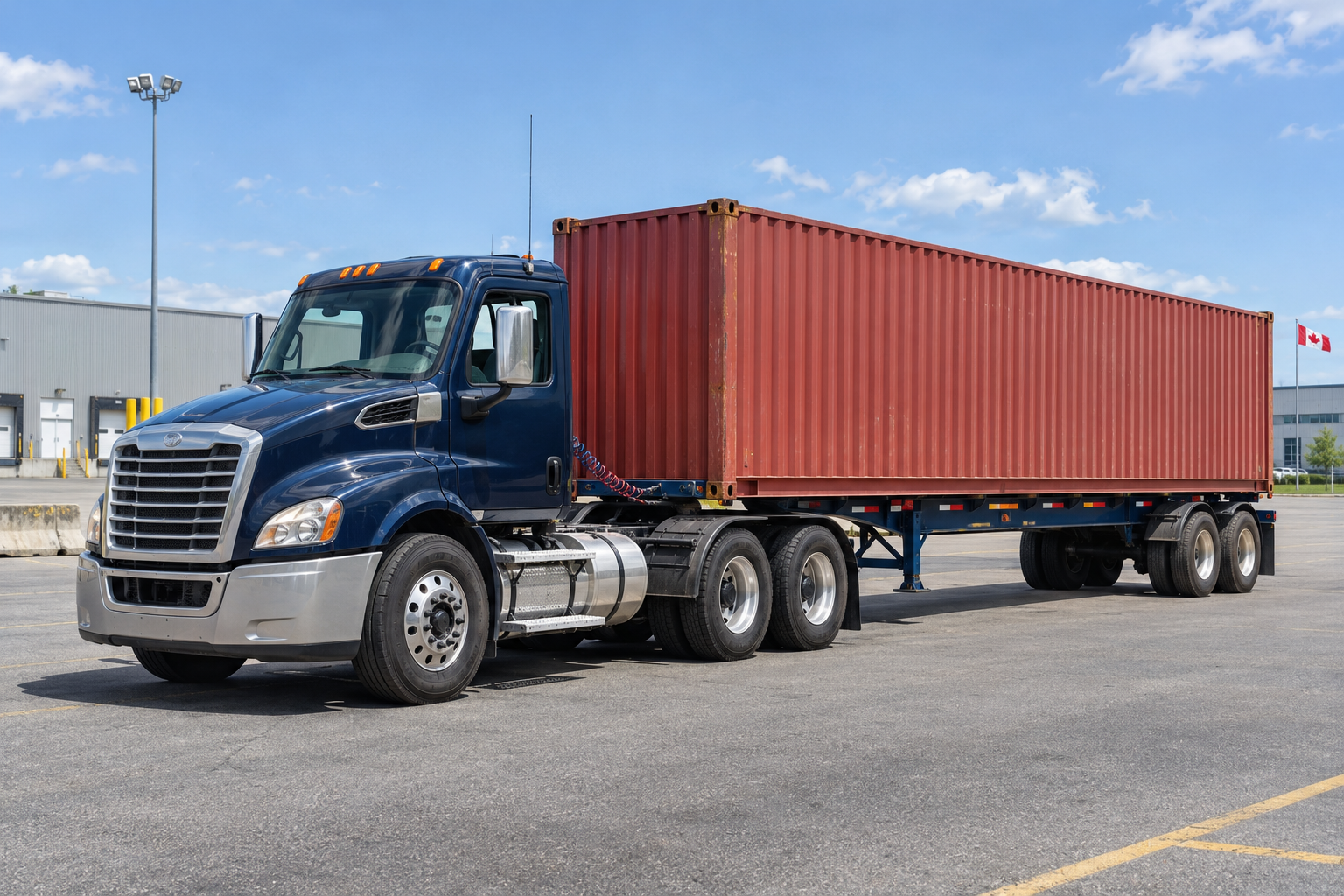
We palletize and shrink wrap freight at our Kleinburg facility every day, mostly cartons coming out of floor-loaded containers. Here is how we build pallets that arrive the way they left, and what to check if you're building them yourself.
Start with the right pallet
In North America the standard is the 48" x 40" pallet, and most warehouses, racking and trailers are planned around it. Check the pallet before you load it: no cracked deck boards, no missing blocks, no nails sticking up. A broken pallet will fail under the forklift, not on the loading dock where you'd notice.
If your customer or receiver has pallet requirements, such as a specific grade, heat-treated pallets for export or plastic pallets, find out before you build.
How to stack cartons on a pallet
- Heaviest on the bottom. Sounds obvious, but mixed-SKU pallets break this rule all the time.
- No overhang. Cartons hanging over the pallet edge lose a large part of their stacking strength and are the first thing a forklift or a neighbouring pallet catches. Keep everything inside the pallet's footprint.
- Column or interlock? Column stacking (cartons directly on top of each other) keeps the carton corners aligned and gives the most compression strength. Interlocking (bricklaying the layers) holds the load together better but weakens the cartons. For heavy cartons, column stack and let the wrap and corner boards do the holding.
- Flat top. A flat top layer means another pallet can sit on it if the receiver double stacks, and the wrap can grip properly.
- Watch the height. Many distribution centres set a maximum pallet height for their racking, and trailers and containers have height limits at the door. Ask the receiver before building tall pallets.
Shrink wrap vs stretch wrap
People use the terms interchangeably, and on most warehouse floors "shrink wrapping" means stretch wrapping: a stretchy plastic film wound around the load by hand or by machine. True shrink wrap is a film that is heated so it shrinks tight around the load, which is less common for everyday pallets. Either way, the goal is the same: tie the cartons to each other and to the pallet so the load moves as one unit.
How to wrap a pallet properly
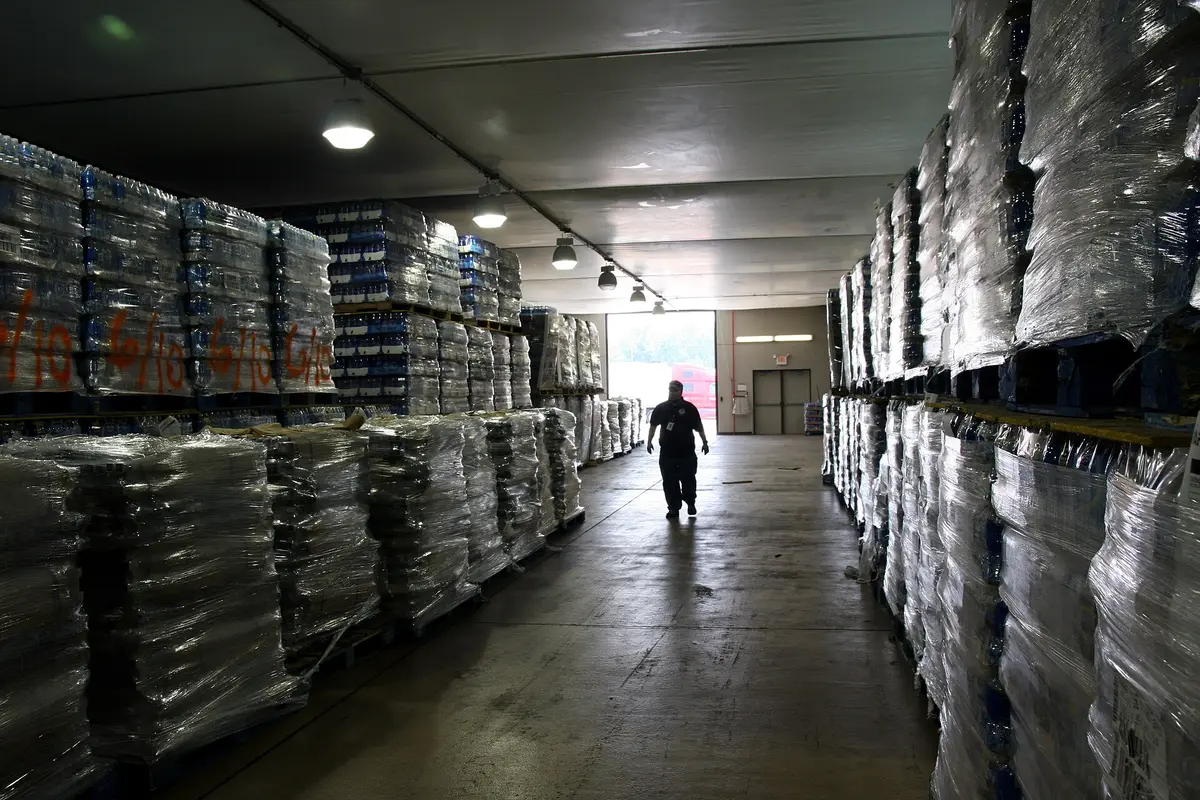
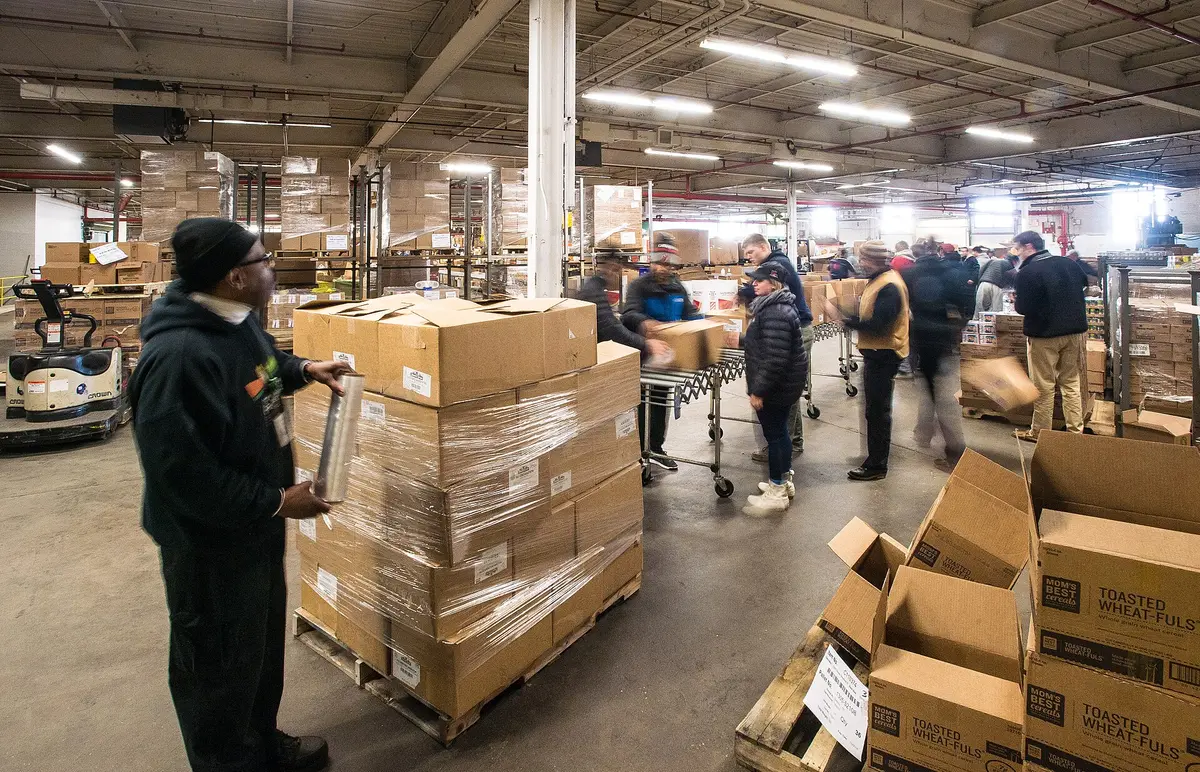
- Anchor the film to the pallet. Start by wrapping the bottom of the load and the pallet itself together, two or three times. A load that isn't tied to the pallet will slide off it as one neat, wrapped block.
- Overlap each pass. Work up the load with each layer of film overlapping the one below by roughly half.
- Extra wraps top and bottom. These are the stress points. Add a few extra passes at the base and the top layer.
- Keep the film tight. Loose film looks wrapped and does almost nothing. The film should be stretched as you go so it pulls the cartons together.
- Use corner boards and a top sheet for heavy or fragile loads. Cardboard edge protectors stop the film from crushing the carton corners, and a top sheet keeps out dust and moisture.
- Finish with a tuck, not a knot. Tuck the tail of the film under the last pass so it doesn't snag.
Label every pallet clearly
Put a label or placard on at least two sides of every pallet with the consignee, PO or reference number, and pallet count (for example, "Pallet 3 of 12"). Labels under the wrap stay readable and don't get torn off. If the pallet has a "do not stack" or "this side up" requirement, mark it on more than one side.
Common pallet-building mistakes
- Wrapping only the cartons and not the pallet.
- Building pallets taller than the receiver's racking or the trailer door.
- Mixing light and heavy SKUs with the heavy ones on top.
- Too little film on heavy loads, or film wound so loosely it has no tension.
- No count and no photos. If a pallet arrives short, you have nothing to show what was on it when it left.
Quick pallet checklist
| Check | Do this | Avoid this |
|---|---|---|
| Pallet | Sound 48" x 40" pallet of the grade your receiver wants | Cracked deck boards or missing blocks |
| Stacking | Heaviest cartons on the bottom, all inside the footprint | Overhang past the pallet edges |
| Height | Within the receiver's racking and the trailer door | Building as tall as possible |
| Wrapping | Tie film to the pallet, overlap by half, extra passes top and bottom | Wrapping the cartons only |
| Labels | At least two sides, with a count such as "3 of 12" | One label that can be torn off |
| Records | Count and photograph every pallet | No proof of what left the dock |
Palletizing and shrink wrapping at Jaden Express
At our facility on Highway 50 in Kleinburg we palletize and shrink wrap freight for GTA importers and shippers, most often straight out of a container we've just unloaded and counted. Pallets are built to your receiver's requirements, wrapped, labelled and photographed, and can go out on a 53' trailer or straight truck, stay in our warehouse, or be transloaded for onward delivery.
Call dispatch at 647-233-6600 or request a quote to have your next container unloaded, palletized and delivered in one booking. We also handle the container drayage from the terminal, and our guide to Toronto drayage rates explains how that part is priced.
Related reading
- Floor-Loaded Container Unloading in Toronto: Time, Costs and Your Options
How long hand-unloading really takes and the three ways to handle it. - How Many Pallets Fit in a 20ft, 40ft and 45ft Container?
Pallet counts for every container size, plus weight and door-height limits. - Container Drayage Rates in Toronto: What Your GTA Quote Should Include
What each line on a GTA drayage quote means and how to keep the total down.
Frequently asked questions
What size is a standard pallet in Canada?
The most common pallet in Canada and the U.S. is 48" x 40". Euro pallets (1200 x 800 mm) are common on European imports.
How many times should you wrap a pallet?
Enough to cover the whole load with overlapping passes, plus a few extra passes at the base (tied to the pallet) and at the top. Heavy loads need more film and tighter tension than light ones.
What is the difference between shrink wrap and stretch wrap?
Stretch wrap is stretched around the load as it's applied. Shrink wrap is heated so it shrinks tight. Most warehouses use stretch wrap for everyday pallets, even when they call it shrink wrapping.
Should cartons overhang the pallet?
No. Overhanging cartons lose stacking strength and are easily damaged. Keep everything inside the pallet's edges.
Can you palletize cartons from a floor-loaded container?
Yes. That's one of the most common jobs at our facility. We unload the container, build and wrap the pallets, and deliver them or store them for you.